Spring and fall outage seasons run on a schedule — until they don’t. Across the Ohio Valley, power generation facilities are in various stages of planned shutdown right now: units offline, inspection crews on-site, and maintenance windows that took months to plan burning down fast. The clock pressure is real. What gets addressed during the outage doesn’t have to become an emergency later. What gets skipped often does.
Precision Pump & Valve Service works with Ohio Valley power generation facilities during outage season — valve testing and replacement, pump inspection, and emergency response when a unit tries to come back online and something isn’t right. If you’re in an outage now, or planning one, here’s what that partnership looks like.
The Outage Window Is Your Only Access to Equipment That Never Stops
Most of the pumps and valves in a power generation facility run continuously for months or years between outages. There is no other inspection window. Bearing wear, seal degradation, valve seat erosion — these conditions develop gradually and stay hidden until startup puts the equipment back under load. The outage is the moment to look, and it passes quickly.
The temptation during a compressed outage schedule is to address only what’s on the required scope and defer everything else to next time. Sometimes that’s the right call. But for equipment in critical service — cooling water systems, feed pumps, control valves on primary process loops — deferring known wear into another operating cycle is a calculated risk. The question is whether it’s a risk worth taking.
Valve Work Is the Starting Point. Pump Inspection Should Be on the Scope Too.
Valve testing and replacement is the core of what PPVS does during scheduled outages at Ohio Valley power facilities — pressure relief valve testing and recertification for industrial service, control valve inspection, isolation valve replacement, and actuator work. That’s work that has to happen during the outage regardless.
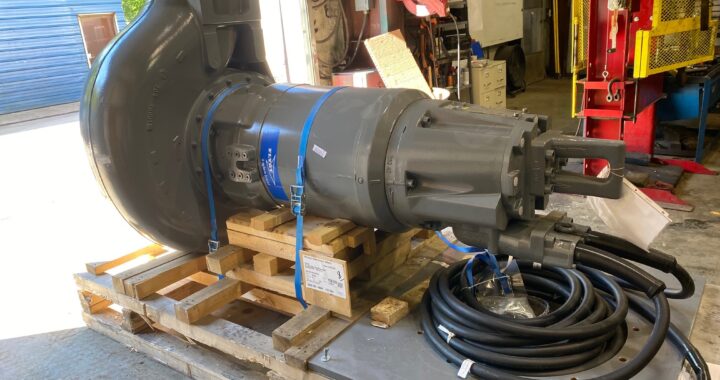
What we’d like more plant engineers associating Precision with is pump inspection during that same window. If PPVS is already on-site and the unit is already down, the incremental cost of pulling a pump for inspection — checking wear rings, impeller condition, bearing housing, mechanical seal — is far lower than the cost of scheduling a separate visit, or worse, responding to a failure after the unit is back online. The outage scope is the natural place to have that conversation.
When the Shared Utility Loop Is in the Mix
Not every pump failure stays contained to the facility it’s in. Many Ohio Valley industrial campuses have multiple operators sharing common utility infrastructure — cooling water, process water, fire protection systems. A pump failure in one of those shared loops doesn’t just affect the operator who owns the equipment. It can take down neighbors who depend on the same supply.
That’s a different category of consequence than a single-operator failure. It affects production, safety systems, and relationships between co-located companies. For plant engineers responsible for shared utility systems, the outage is an especially important time to assess pump condition — because the downside of a mid-season failure is measured across the whole campus, not just one unit.
Startup Callouts: When the Unit Comes Back Online and Something Isn’t Right
Even well-managed outages produce surprises at startup. Valves that tested fine under static conditions develop leaks under operating pressure. A unit trips on a control valve that didn’t perform as expected. These situations happen at odd hours, under significant pressure to get the unit back on line, and they require a service partner who can respond fast and already knows the plant.
PPVS provides emergency callout response during and after outage season for exactly this scenario — technicians who have been in the facility, know the valve and pump inventory, and can be on-site quickly. Not a national dispatch center routing a technician who has never been to that plant. The difference in response quality and speed is real.
Talk to PPVS Before Your Next Outage Window Closes
We’ve built strong service partnerships with Ohio & Kanawha Valley power generation facilities and we’d welcome the opportunity to replicate that model across other facilities in the region. If you’re in an outage now or scheduling one this fall, reach out before the window closes.
24/7 emergency service available. Factory-authorized technicians. Serving Ohio Valley power generation, chemical, and industrial facilities from Charleston, WV, our Wheeling shop in northern WV, and Louisville, KY.
Contact Precision Pump & Valve Service or visit ppvs.com to talk through your outage scope.